


















From Basics to Better: Drills to Elevate Jump Rope Practice

From Basics to Better: Drills to Elevate Jump Rope Practice
Jump rope is one of the most versatile, portable, and affordable tools for fitness, coordination, and athletic performance. Yet many of us start with a few basic hops and call it a day, only to stall when we crave more speed, control, or variety. The secret to sustained progress isn’t just buying a faster rope or practicing longer; it’s structuring drills that target specific skills and gradually layering complexity. In this guide, you’ll find a practical, drill-based path “from basics to better” that helps you build a solid foundation, master technique, and progressively elevate your jump rope practice. Whether you’re training for cardio, endurance, or skillful tricks, these drills will help you jump smarter, safer, and more efficiently.
Foundations: Mastering the Basics
Before you chase fancy footwork or high-speed intervals, ensure your basics are solid. A clean foundation reduces injury risk and gives you a reliable platform to add complexity later. Here are the core elements to lock in:
Grip and rope setup: Hold the handles lightly with your wrists doing the turning, not your whole arm. The rope should rest near your hips, and you should be able to reach a comfortable height with your wrists. The rope length should allow roughly one diameter of rope from your armpit to the ground when you stand with both feet together. If the rope is too short, you’ll tangle and trip; if too long, you’ll have extra slack that slows your turns.
Posture and timing: Stand tall with shoulders relaxed, head neutral, and chest open. Your core engages to stabilize the torso, and you rotate the rope from the wrists with the rhythm coming from your forearms and wrists, not the shoulders. Landing softly on the balls of the feet helps reduce impact and keeps you on balance for the next revolution.
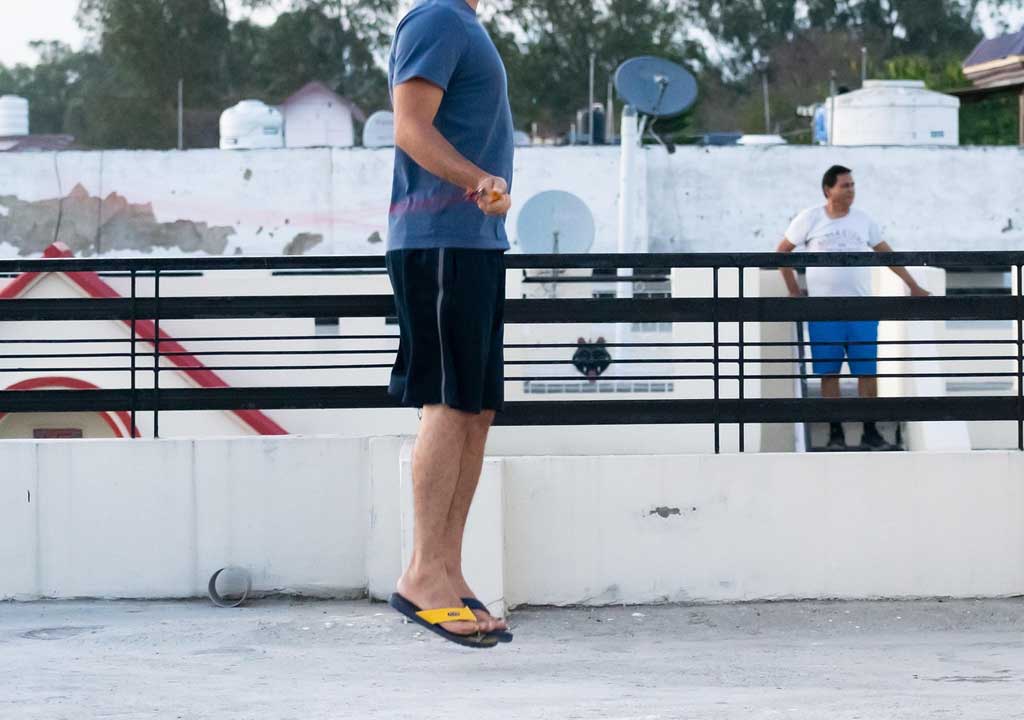
Single-unders as the baseline: Start with simple two-foot bounce (both feet together) and a steady cadence. Gentle, controlled hops prevent fatigue and build endurance over time. The goal is a light, springy rhythm rather than a heavy stomp. As you find your tempo, you’ll notice your breath and your footfalls syncing up, which is the heart of efficient ropework.
Rope awareness and continuity: Focus on the rope’s arc and the exact moment it passes under your feet. You should feel the rope brushing the ground (or just clearing it) in a smooth, continuous loop. If you land and then pause, you’re breaking rhythm; aim for a continuous flow with tiny, quick hops that keep you in motion.
Breath control: Coordinate breathing with movement. A simple pattern—inhale for two to four hops, exhale for the next two to four—helps maintain pace and reduces fatigue. This is especially important as you introduce faster drills, where breath control keeps you from overpowering your technique.
Consistency over complexity: Perfect form today beats flashy tricks tomorrow. When you can perform several minutes of clean two-foot bounces with minimal wasted motion, you’ve earned the right to move up the ladder.
Core Drills: Build Rhythm, Timing and Control
The following drills are designed to teach you timing, rhythm, footwork, and rope control. They’re organized from foundational to intermediate, with clear cues and progressions. Start with 60–90 seconds per drill, then progressively extend to 2–3 minutes as you gain comfort.
- Basic Bounce (Two-Foot Jump) — The bread-and-butter. Keep your hops light, aim for a fast but controlled cadence, and let the wrists do the turning. Focus on keeping your feet close together and your torso upright. This drill trains endurance, timing, and rope clearance.
- Alternate Foot Step Drill — Mimic a light jog in place while turning the rope. Land on the ball of one foot, then the other, and maintain a steady cadence as the rope passes under alternating feet. This builds unilateral control, ankle stability, and the sense of timing needed for more advanced footwork.
- Boxer Shuffle (Rhythmic Side-to-Side) — Shift weight from one foot to the other while keeping a small, quick bounce. Move your feet in a shallow crossover when you feel confident, but keep your rope speed consistent. This drill improves agility, rhythm, and the ability to maintain rope timing during lateral movement.
- High Knees with Rope — Bring your knees up toward hip height while continuing to rotate the rope. The goal isn’t height but control—lift with the hips, keep the core engaged, and let the rope pass under you between knee heights. This builds hip flexor strength, coordination, and power without overstraining the ankles.
- Backward Turn Drill — Turn the rope as you face backward, stepping slightly to maintain balance. This develops spatial awareness and will improve your cross-behind or behind-the-back drills later on. Start near a wall for safety and gradually increase range of motion as confidence grows.
- Side Swing (Rope Behind the Heels) — Stand still, swing the rope to the side in front of you until it passes behind your heels, then twist your wrists to bring it forward again. This drill isolates timing and helps you feel the rope arc without jumping, improving control for complex moves.
- Single-Leg Hops (Beginner-Level) — Perform a few hops on one foot, then switch. Keep the other foot off the ground and use small hops. This builds balance and unilateral strength, but avoid long single-leg sets until you’re comfortable with the rest of the drills.
Notes:
- If you trip often, simplify. Return to Basic Bounce for a few minutes, then reintroduce the drill with a shorter rope length or a slower pace until your timing improves.
- Always warm up before these drills with 3–5 minutes of light cardio and dynamic stretches for the calves, ankles, hips, and shoulders.
Progression: Layering Challenges for Real-World Jump Rope Fitness
Progression isn’t about chasing harder tricks every session; it’s about methodically adding complexity as your body and brain adapt. Here’s a practical ladder you can follow to move from basics to more advanced, while keeping the risk of injury low and the enjoyment high.
Stage 1 — Consistency and rhythm (2–3 weeks):
- Master Basic Bounce and Alternate Foot Steps for 3–4 minutes total per session.
- Incorporate Boxer Shuffle to build lateral agility and rhythm, 1–2 minutes per set, 2–3 sets.
- Introduce High Knees with Rope for 30–60 seconds per set, 3–4 sets, with 30–60 seconds rest between sets.
Stage 2 — Precision and control (2–4 weeks):
- Add Side Swing and Backward Turn drills to improve spatial awareness and rope timing, 1–2 minutes per drill, 3–4 sets.
- Perform a short circuit: Basic Bounce (60s) ? Boxer Shuffle (60s) ? Side Swing (60s) ? Rest (60s). Repeat 3–4 times.
- Integrate 1–2 rounds of Heel-to-Toe drill to diversify foot contact while keeping a controlled rope pace.
Stage 3 — Speed and endurance (3–6 weeks):
- Short, fast intervals: 20–30 seconds of Basic Bounce at a higher cadence, followed by 20–30 seconds of rest. Do 6–10 rounds.
- Longer continuous rounds: 5–8 minutes of steady, moderate pace, alternating with 1–2 minutes of technique-focused drills (e.g., High Knees, Boxer Shuffle).
- Introduce Crossovers and Double-Unders only after you’re consistently achieving clean basic and intermediate forms. Practice the cross (one time in each direction) with a slow, controlled tempo to learn rope control.
Stage 4 — Skill integration and conditioning (ongoing):
- Combine drills into a short circuit that lasts 7–12 minutes, including a few minutes of warm-up and a few minutes of cool-down. For example:
- Circuit: Basic Bounce (60s) ? Alternate Foot Step (60s) ? Boxer Shuffle (60s) ? High Knees (30s) ? Side Swing (30s) ? Crossovers (30s, light and controlled) ? Rest (60s). Repeat 2–3 times.
- Work on tempo and consistency across rounds; the goal is to maintain technique under fatigue.
Programming Jump Rope Sessions: A Simple Weekly Plan
Consistency matters more than specialization. Here’s a practical, beginner-friendly weekly plan you can customize. Each session lasts about 20–40 minutes, depending on your time and energy. Begin every session with a 5-minute warm-up and finish with a 5-minute cool-down including gentle stretches.
Week A (Foundation and rhythm):
Day 1: Fundamentals focus
- 5 minutes Warm-up (light cardio + dynamic ankle/hip mobility)
- Basic Bounce: 3 rounds of 60 seconds
- Alternate Foot Step: 3 rounds of 45 seconds
- Boxer Shuffle: 2 rounds of 60 seconds
- Rest: 60–90 seconds between sets
- Cool-down: 5 minutes
Day 3: Add control drills
- 5 minutes Warm-up
- Side Swing: 2 rounds of 45 seconds
- Backward Turn: 2 rounds of 45 seconds
- Heel-to-Toe: 2 rounds of 30 seconds
- Basic Bounce: 3 rounds of 60 seconds
- Cool-down
Day 5: Endurance and light speed
- 5 minutes warm-up
- Basic Bounce: 4 rounds of 60 seconds
- Quick cadence sprint: 6 rounds of 20 seconds on, 20 seconds off
- Boxer's shuffle: 2 rounds of 60 seconds
- Cool-down
Week B (Introduction of complexity and speed):
Day 1: Intermediate rhythm
- Warm-up
- Alternate Foot Step: 4 rounds of 60 seconds
- High Knees with Rope: 3 rounds of 30 seconds
- Boxer's Shuffle + short cross cue practice (no actual cross): 2 rounds of 30 seconds
- Cool-down
Day 3: Short circuits
- Warm-up
- Circuit (3 rounds): Basic Bounce 60s ? Side Swing 30s ? Backward Turn 30s ? Rest 60s
- Cool-down
Day 5: Endurance focus
- Warm-up
- Basic Bounce: 6 minutes continuous, with micro-intervals at faster cadence for 15–20 seconds every minute
- Alternate Foot Step: 3 rounds of 60 seconds
- Cool-down
As you advance, swap in more advanced drills (Double Unders, Crossovers) only when you can perform the basics with clean form for several minutes steadily. Build the skill gradually and respect your joints, especially your ankles and knees.
Technique, Safety, and Common Pitfalls
Technique is the compass that keeps you focused on progress, while safety ensures you stay healthy and avoid injuries that derail your practice. Here are practical tips to help you stay on track:
- Surface matters: Jump on a forgiving surface like wood or rubberized gym floors. Avoid concrete or hard pavements for long sessions. A yoga mat under your feet can help in some drills, but ensure you have enough free space to move without intercepting objects or slipping.
- Rope length and maintenance: If your rope frequently tangles or you trip, re-check the length. A rope should reach armpit height when you stand tall with the rope hanging in front of you. Inspect the rope for wear, frayed handles, or loose knots and replace as needed. A light-weight beaded rope is great for beginners; a velocity rope is excellent for faster speeds once you have confidence.
- Foot contact and cadence: Avoid stomping. Landing softly on the balls of your feet helps keep you in control and reduces impact. When fatigue starts to creep in, slow down to rediscover technique rather than pushing through a bad pattern.
- Wrist-driven motion: The rope should rotate primarily from the wrists and forearms. If you’re using larger shoulder movements, your rope will be thick and inconsistent, increasing the likelihood of mis-timings and trips.
- Breathing and cadence: A consistent breathing pattern helps you stay calm and maintain tempo. If you’re holding your breath during high-intensity bursts, you’ll fatigue faster and lose rhythm earlier.
- Progress at your own pace: Don’t rush to double-unders or crossovers. They require precision in timing and wrist control. Build trust in the basics first, and then introduce additional moves gradually, with a focus on form over speed.
Troubleshooting Common Issues
Here are some frequent challenges jumpers face and quick fixes you can implement right away:
- Tripping often: Shorten the rope a touch, slow the cadence, or increase the height of your hops. Practice the Basic Bounce longer to regain rhythm before returning to more complex drills.
- Rope hitting your feet: Ensure you’re not bending your wrists too low or turning the rope too close to your feet. Raise the wrist angle slightly and maintain a small, consistent arc.
- Uneven tempo between sides: Return to the Alternate Foot Step drill to rebuild balancing from one side to the other. Often, the issue is a slight pause between feet; focus on continuous movement with minimal interruptions.
- Fatigue and loss of form: Reduce duration, maintain proper form, and increase reps with shorter intervals. Fatigue is a signal to revisit fundamentals rather than push through with poor technique.
- Aching calves or ankles: Check footwear, land softly, and scale back the intensity. Strengthen the lower legs with mobility work and gentle calf raises to build resilience over time.
Equipment Essentials: What to Look For
Your gear should be tailored to your goals, current skill level, and environment. Here are fundamentals to consider as you outfit your jump rope practice:
- Rope type: For beginners, a slightly longer, light-diameter rope with smooth bearings is ideal. For advanced speed work, a speed rope (thin cable with metal handles) can offer quick turns, but it demands better technique and wrist control.
- Rope length: A common method is to stand on the middle of the rope; the handles should reach up to your armpits. If you’re taller or shorter, adjust accordingly. A rope that’s too short will limit your range; too long will drag on the ground and cause more trips.
- Handles and grip: Ergonomic handles with comfortable grips reduce hand fatigue during longer sessions. Some handles have bearings for smoother rotation; if you’re just starting, a simple, well-balanced rope with easy-to-grip handles is fine.
- Surface shoes: Shoes with good cushioning and support can reduce ankle and knee stress. Avoid worn-out shoes that lack support, and replace them when needed.
- Space and safety: Ensure you have a clear practice area with enough ceiling height, especially for faster moves that require bigger rope arcs. Keep the floor free of clutter to reduce the risk of tripping on objects between sets.
Tracking Progress: How to Know You’re Improving
Progress can be visible in multiple ways beyond longer sessions or faster times. Use these markers to gauge your improvement and stay motivated:
- Consistency: You’ve established a routine and can perform a sequence of drills with good form on non-ideal days as well as great days.
- Form stability: Your basic techniques are repeatable for 3–5 minutes continuously with minimal fatigue. You can insert more challenging moves slightly without breaking rhythm.
- Rhythm and cadence: You maintain a steady tempo even as you incorporate new drills, and you can predict the rope’s arc with confidence.
- Endurance: You can complete longer rounds of drills with proper technique—without needing to pause or revert to basics repeatedly due to fatigue.
- Skill acquisition: You can perform more advanced drills, like Crossovers or Double Unders, with controlled form, used sparingly and carefully as you continue to master the basics.
Safety First: Warming Up, Cooling Down and Listening to Your Body
Every workout should begin with a proper warm-up and end with a cool-down. Jumping rope puts dynamic stress on calves, shins, ankles, and knees, so prehab and mobility work can prevent injuries. Here’s a simple framework:
Warm-up (5–10 minutes):
- Light cardio (marching, jogging in place) for 3–5 minutes
- Dynamic ankle circles, toe taps, leg swings
- Arm circles and shoulder mobility to loosen the arms for rope turns
Cool-down (5–10 minutes):
- Gentle walking to reduce heart rate
- Static stretches focusing on calves, hamstrings, hip flexors, and shoulders
- Deep breathing to restore calm and support recovery
If you feel pain (not just normal fatigue), stop and reassess. Pain is a signal that something’s not right—rest, adjust your form, or swap in lower-intensity drills until you regain control.
Case Study: How a Busy Athlete Elevates Jump Rope Practice
To illustrate how drills can transform practice, consider a fictional but realistic plan for a busy professional who wants to improve endurance and coordination. The athlete has a 30-minute window three times a week and uses the ladder approach described above.
In Week 1, they focus on consistency: Basic Bounce and Alternate Foot Steps, performing 3 rounds of 60 seconds for each drill, with short rests. They add Boxer Shuffle and High Knees with Rope for variety, emphasizing form rather than speed. Week 2 introduces Side Swing and Backward Turn, both practiced in short intervals to develop spatial awareness, with a total session time around 25 minutes.
Week 3 blends drills into short circuits: Basic Bounce 60s ? Side Swing 30s ? Backward Turn 30s, repeated 3–4 times. They begin to add short sprints in the rest period, resembling interval training. Week 4 increases the work-to-rest ratio and introduces endurance-based rounds (5–7 minutes continuous rhythm) with short focus breaks to correct technique. By Week 6, they’re comfortable with the Basic Bounce, Alternate Foot Step, and Boxer Shuffle in longer sequences and begin to introduce low-risk advanced moves like Crossovers in controlled, low-volume practice.
The key takeaway: progress isn’t about jumping to the most difficult move; it’s about layering skills in a way that your system can absorb—skill, strength, endurance, and coordination all improve in concert.
Conclusion: Elevate Your Jump Rope Practice, One Drill at a Time
Jump rope practice is a journey that rewards patience, deliberate practice, and mindful progression. By starting with a strong foundation, embracing targeted drills, and following a clear progression ladder, you’ll build proper technique, improve coordination, and unlock new levels of speed, endurance, and control. The drills outlined here—Basic Bounce, Alternate Foot Step, Boxer Shuffle, Side Swing, Backward Turn, High Knees with Rope, and gradually added complexities—provide a practical framework to transform a simple workout into a dynamic, skills-based training routine.
Remember: consistency is king. Set aside regular, focused practice time; track your progress; and adjust the drills to fit your goals, space, and equipment. Whether you’re training for cardio, a sport, or just personal fitness, these drills will help you elevate your jump rope practice from basics to better—and keep you motivated to train, day after day.
LIKED THIS ARTICLE? SHARE IT: