



















From Single Unders to Double Unders: Progressive Technique Drills

From Single Unders to Double Unders: Progressive Technique Drills
Jump rope training is a deceptively simple activity that rewards precision, rhythm, and patience. For many athletes, the first milestone is a flawless string of single unders, where the rope passes under the feet once per jump with a smooth, repeatable cadence. But the most dramatic leap in speed and conditioning comes when you unlock double unders: two rope revolutions per jump. The leap from singles to doubles isn’t a leap of brute force; it’s a refined progression of technique, timing, and consistent practice. In this guide, you’ll find a practical, drill-based path to progress safely from single unders to double unders, with cues, common pitfalls, and workout templates you can use week after week.
Before we dive into the drills, a quick note on mindset. Double unders demand a very specific rhythm: the jump must be high enough to allow two rope passes, yet controlled enough to keep the rope from tangling or catching on the toes. The pace isn’t a sprint; it’s a careful, measured tempo. Start with small targets, be patient with your progress, and treat each drill as a rehearsal for a precise skill rather than a race to a number. Consistency beats intensity here, every time.
Why Progression Matters: The Benefits of Mastery
There are several reasons to pursue double unders methodically. First, they’re a tremendous metabolic stimulus—fast, repetitive cycles that work your heart, lungs, and legs. Second, the skill transfers to other athletic domains: coordination, spatial awareness, and timing become sharper, which can help in sports that require quick feet and precise movements. Third, the mental payoff is real. Hitting a string of double unders after a patient progression provides a sense of mastery that boosts confidence in training and in competition.
Finally, a robust progression reduces the risk of overuse injuries. Jump rope work involves the ankles, knees, hips, and lower back, and a gradual build lets soft tissues adapt. When you start attempting doubles too soon, you may experience Achilles strain, shin splints, or a sore lower back. A thoughtful progression minimizes those risks while maximizing transfer to faster, more efficient rope work in the long run.
Equipment and Setup: Getting the Right Rope and Posture
Choosing the right rope length and practicing with proper posture lays a solid foundation for all the drills that follow.
Rope length: A good starting rule is to stand on the rope with both feet together. The handles should reach roughly between your armpits and your shoulders. If the rope drags on the ground or feels too long, shorten it a notch. If the rope feels frantic or you’re constantly tripping, lengthen it a touch. For double unders, many athletes prefer a rope length that allows slightly faster spins; you want the rope to reach your lower calf quickly, not drag behind your heels.
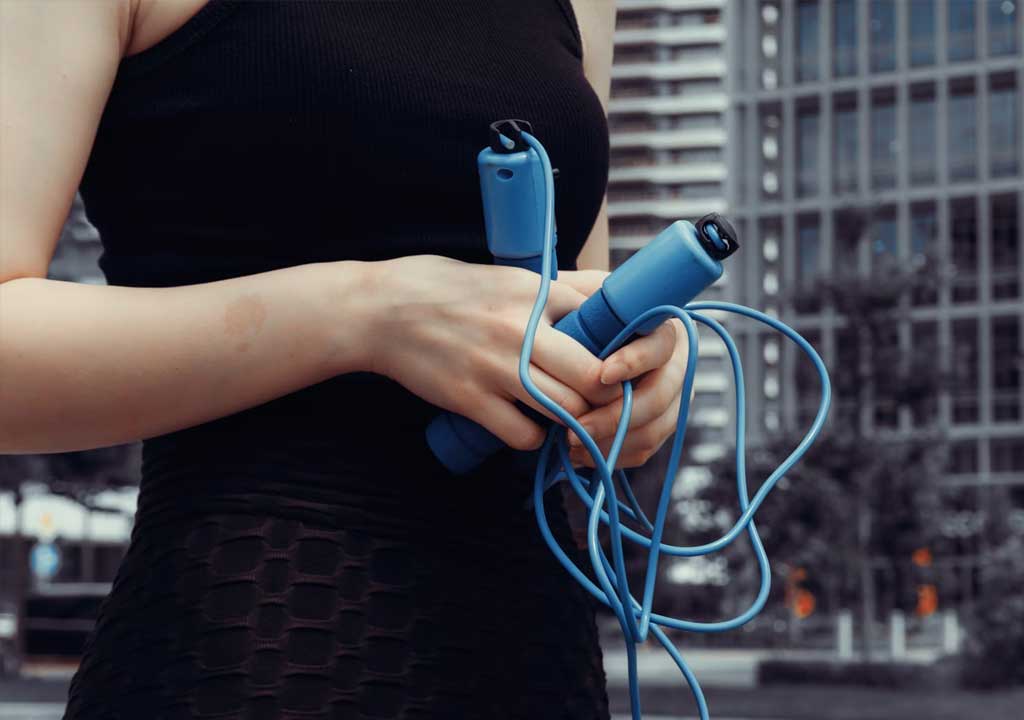
Grip and wrists: Hold the handles with a light grip, letting the wrists—rather than the elbows or shoulders—drive the rope. The elbow should stay relatively close to the torso, and the wrists should do the bulk of the work with small, controlled circles. Think of turning the rope with your wrists while your arms act like a stable frame.
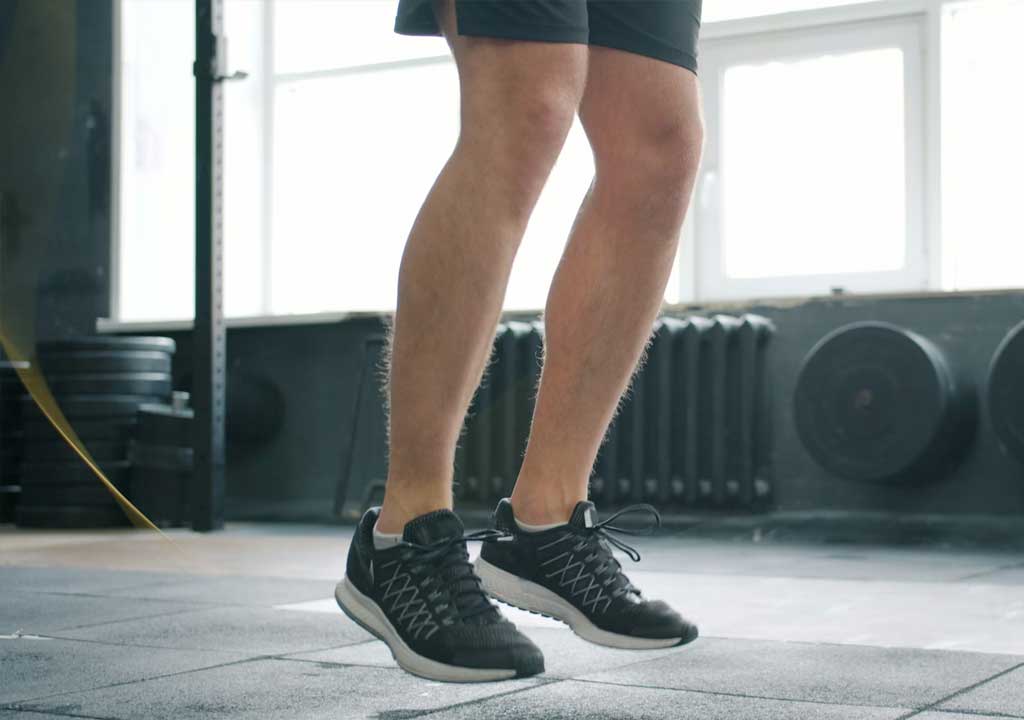
Jump height and landing: Keep the jump height modest. A few inches off the ground is plenty—just enough to clear the rope’s path. Land softly on the pad of your foot, with a slight knee bend to absorb impact. Over time, you’ll see an improvement in efficiency: less vertical travel, more horizontal rhythm, and smoother, faster rope passes.
Posture: Stand tall, chest up, core engaged, shoulders relaxed. Avoid hunching or tensing the upper body. A calm torso makes it easier to maintain a compact arm swing and repeatable jumps.
Foundational Mechanics: Single Unders as Your Baseline
Everything you do from here builds on the quality of your singles. If your singles aren’t smooth, your doubles won’t be smooth either. Use the following checks to lock in a reliable baseline before introducing any double-under work.
- Consistent timing: Each jump should occur on a consistent beat—ideally a count you can repeat. If your timing fluctuates, slow things down and reset.
- Small, quick wrist turns: The rope should spin around your body with controlled speed. If the rope travels too slowly, you’ll trip; if it travels too fast, you’ll compensate with excessive arm movement.
- Soft landings: Land with knees slightly bent and absorb impact with the hips and ankles. Don’t lock out the knees on landing.
- Arm stability: Keep elbows in and wrists doing the work. If you feel your shoulders creeping up toward your ears, relax them and refocus on the wrists.
Work singles until you can perform a continuous set of 60–120 seconds without breaking rhythm. Use a metronome or a timer to keep your cadence honest. The pace you set here will inform your doubles later; a steady, comfortable rhythm makes the transition smoother.
Progression Framework: A Stepwise Path to Doubles
The progression from singles to doubles should be structured in small, testable steps. Below is a framework you can adapt to your schedule. Think in micro-cycles: two to four weeks per phase, with deliberate practice and short, repeatable drills.
Phase A: Solid Singles Mastery (Weeks 1–2)
Goal: 2–3 minutes of continuous singles with near-perfect form. Establish wrist-driven, compact turns and a calm jump.
Phase B: Low-Height, Quick Wrist Drills (Weeks 3–4)
Goal: Begin introducing doubles in a controlled way without relying on height. Practice “double-tap” drills—two quick rope passes that don’t require a full double-under yet, focusing on timing and wrist speed.
Phase C: Slow-Double Initiation (Weeks 5–6)
Goal: Execute a real double under, but at a slow cadence. Focus on keeping jumps small, wrists fast, and landing lightly. Use a longer-than-normal rest to avoid fatigue affecting form.
Phase D: Doubles at a Manageable Cadence (Weeks 7–8)
Goal: Build consistency with a modest number of doubles per set, tying in singles between doubles to cement rhythm. Start to speed up gradually as control improves.
Phase E: Doubles Streaks and Conditioning (Weeks 9–12)
Goal: Achieve longer streaks of doubles with good form, reduce reliance on singles, and integrate doubles into short, interval-based workouts.
Phase-by-Phase Drills: A Practical Route
Phase A — Solid Singles Mastery
Drill 1: Rhythm Singles with Metronome
Set a metronome to a comfortable tempo (start around 100–110 BPM). Jump rope singles in time with the beat. If you miss a rep, reset and re-cue the cadence. Do 3–5 sets of 40–60 seconds with 20–30 seconds rest.
Drill 2: Stop-and-Go Singles
Jump 2–3 singles, then pause for a breath or two before continuing. The goal is to turn the rhythm into a reliable, repeatable pattern. Perform 6–8 sets of 20–30 seconds with 15 seconds rest.
Drill 3: Wrist-Driven Rotation Emphasis
Place emphasis on small wrist rotations rather than sweeping arm movement. Keep elbows tucked and let wrists do the turning. Do 5 sets of 60 seconds with 30 seconds rest.
Phase B — Low-Height, Quick Wrist Drills
Drill 1: Mini-Jump Singles
Jump just high enough to clear the rope, not more. This builds efficient, low-energy technique. Do 4–6 sets of 45–60 seconds with 20 seconds rest.
Drill 2: Double-Under Preparation Taps
With the rope spinning, practice two rapid taps with the rope as if you’re preparing for a double under, but land before completing the second pass. The objective is timing, not two passes. 6 sets of 20–30 seconds with 15 seconds rest.
Drill 3: Wrist Isolations
Stand with both feet together, keep the hands stationary except for wrist rotation. The rope should pass overhead and behind in a tight, controlled arc. 5 sets of 30–45 seconds.
Phase C — Slow-Double Initiation
Drill 1: Slow Doubles (with Power Stop)
Try one double under every 3–4 singles, pausing after each double to regain form. Focus on soft landings and wrist speed. Do 6–8 sets of 15–20 seconds with 30 seconds rest.
Drill 2: Double-Under Pause Breaks
Perform 10–12 seconds of doubles, then 20 seconds of singles. Alternate for 5–8 rounds. This teaches you how to switch into and out of doubles without breaking rhythm.
Phase D — Doubles at a Manageable Cadence
Drill 1: 1:1 Sets
One double under for each jump, then return to singles to reset if needed. Do sets of 5–8 doubles, separated by 30 seconds of singles. Repeat 6–10 rounds.
Drill 2: Singles Between Doubles
Do a sequence like: 2 doubles, 4 singles, 2 doubles, 4 singles, etc. This pattern reinforces timing while allowing micro-rests to maintain form. 6–8 rounds with 20–30 seconds break between rounds.
Phase E — Doubles Streaks and Conditioning
Drill 1: Doubles Ladder
Build from 2 doubles up to 6 doubles in a row, resting as needed but keeping the rest periods short. Use a goal to hit a target rep count within a single session (e.g., 50 doubles spread over 5 rounds). This drills your endurance and ensures consistency in reps.
Drill 2: Intervals with Singles as Recovery
Work 20–30 seconds of doubles, followed by 30–40 seconds of singles or light rest. Repeat 8–12 rounds. This mirrors real workouts where doubles appear amid other movements and gives your body a chance to adapt to alternating intensities.
Common Mistakes and How to Fix Them
Even with a solid plan, you’ll run into typical problems as you push toward doubles. Here are the most common mistakes and practical fixes.
- Mistake: Jumping too high. Fix: Lower your jump height and exaggerate the wrist action to keep the rope close to your ankles. Use the “mini-jump” approach for doubles to maintain rhythm without extra vertical travel.
- Mistake: Large, arm-driven swings. Fix: Keep arms close to your torso and let wrists do the turning. Imagine your forearm as a small lever and your wrists as the engine that drives the rope.
- Mistake: Poor timing—rope catches on the toes. Fix: Slow down the cadence, tighten the wrist action, and focus on a smoother, more compact arc. Practice with slower tempos and gradually increase pace as you gain control.
- Mistake: Fatigue degrades form. Fix: Shorten the drill windows, emphasize rests, and revisit Phase A to rebuild consistency before returning to doubles.
- Mistake: Rope length inconsistency. Fix: Re-check rope length and adjust as needed. A rope that’s too long or too short can sabotage rhythm and force unnecessary strain.
Warm-Up and Conditioning for Doubles
A proper warm-up primes your ankles, calves, and hips for quick, precise jumps. Include ankle circles, calves raises, light squats, hip openers, and a short period of light rope work to wake up the nervous system. For conditioning, structured jump rope sessions can be woven into your routine like this:
- 5–8 minutes of singles at a comfortable pace to warm up.
- 3–4 minutes of practice with low-height doubles at a slow cadence.
- Short bursts of 20–40 seconds doubles with 20–40 seconds rest, repeated 6–8 rounds.
- Finish with core stability work and gentle mobility to cool down.
As you progress, you can weave doubles into longer circuit workouts, replacing a portion of your cardio or HIIT segments with short, intense rope intervals. The key is to maintain form: if you start to lose technique, slow down and reset rather than push through sloppy reps.
Weekly Workout Template: A Simple, Reusable Plan
If you want a concrete weekly schedule that supports this progression, try the template below. It’s designed for a 3–4 day-per-week rope routine, with one or two rest days in between sessions.
- 5 minutes: dynamic warm-up (ankle circles, leg swings, hip openers).
- 8 minutes: singles at a steady tempo (metronome 100–110 BPM).
- 6 sets: 40 seconds singles, 20 seconds rest.
- 5 minutes: cooldown and shoulder mobility.
- 5 minutes: light warm-up.
- 4 sets: 30 seconds slow doubles, 30 seconds singles, 30 seconds rest.
- 6 sets: 20 seconds mini-jump singles, 40 seconds rest.
- 5 minutes: mobility and breathing work.
- 5 minutes: warm-up.
- 6 sets: 10–15 seconds doubles (low height), 15 seconds rest.
- 4 sets: 1 double under every 4 singles (cadence 4:1), 30 seconds rest.
- 5 minutes: cooldown.
- 5 minutes: warm-up.
- 8 rounds: 20 seconds doubles, 40 seconds singles, 60 seconds rest between rounds.
- 5 minutes: cooldown.
Tracking Progress: How to Know You’re Moving Forward
Progress in double unders isn’t always a straight line. Here are practical indicators to track so you stay motivated and accurate:
- Improved consistency: fewer trips and more clean double unders in a row.
- Lower error rate under fatigue: you can maintain form when workouts get tougher or longer.
- Increased cadence stability: your rhythm remains even as speed changes.
- Higher jump efficiency: your jumps become lower but more precise, saving energy and reducing impact.
Keeping a simple log helps. Note down the number of doubles you can string together cleanly, your average cadence (revolutions per minute of the rope), and any fatigue-related changes. Revisit your notes after 4–6 weeks to see tangible changes in repeatability and speed.
Advanced Tips for Doubling Down on Doubles
Once you’ve established a solid foundation, you can introduce a few advanced cues to push your doubles further without sacrificing form.
Coordinate exhale with the landing to maintain a steady rhythm and calm the nervous system. Add a light bounce to the toes between reps to keep the jump light and to create muscle memory for quick transitions. Slightly adjust your grip and wrist speed to alter rope pace. If you find yourself overshooting, slow the rope slightly; if you’re scuffing, accelerate the turn a touch. Give each rep a tiny mental cue, like a rhythm phrase you repeat in your head. A simple phrase such as “1-2-3, doubles!” can anchor timing across sets.
Integrating Doubles into Real Training
Double unders aren’t just a party trick for gym bragging rights. They’re a robust conditioning tool that can elevate interval training, CrossFit-style workouts, or any sport requiring persistent foot speed and coordination. Here are a few ways to weave doubles into broader programming without losing focus on technique:
- Replace a portion of your cardio endurance blocks with 30–60 second doubles intervals, followed by 60–90 seconds of rest.
- In a strength circuit, perform a block that alternates 30 seconds of doubles with 30 seconds of bodyweight exercises (air squats, push-ups, or burpees). This provides a cardio-strength hybrid stimulus.
- Use doubles as a finisher: 60 seconds of doubles to push your last energy reserves, followed by a short cooldown.
As the weeks progress, you’ll likely want to shorten rest periods and increase the duration or number of doubles. Maintain technique first, and allow your speed to follow from quality rather than forcing rapid progress at the cost of form.
Common Scenarios: When Doubles Don’t Click and What to Do
Even with a well-structured plan, you may encounter sticky moments. Here are common scenarios and quick remedies you can apply on the fly:
- Scenario: Doubles feel choppy or inconsistent. Remedy: Slow down, re-anchor to singles for a minute, then re-enter doubles with a shorter rope swing and lighter jump.
- Scenario: Rope tangles around the feet. Remedy: Reset with a reset drill: a few uninterrupted singles to regain rhythm, then re-test doubles after a short rest.
- Scenario: Back soreness after sessions. Remedy: Check form, hoist less height, and ensure you’re engaging your core to support the spine. Consider reducing volume and focusing on technique for a few sessions.
Putting It All Together: A Sample 8-Week Plan
Here’s a compact, beginner-friendly 8-week plan you can print and follow. It assumes 3–4 workout days per week and aims for a smooth, consistent progression to double unders.
- 3 sessions per week
- 6 sets of 60 seconds singles with 30 seconds rest
- 5 minutes warm-up + 5 minutes cooldown
- 3 sessions per week
- 6 sets of 15 seconds slow doubles + 45 seconds singles (repeat for 6 rounds)
- 4 minutes general mobility
- 4 sessions per week
- 5 sets of 20 seconds doubles (low height) + 40 seconds singles
- 4 sets of 15 seconds singles, 15 seconds doubles (cadence drill)
- 5 minutes cooldown
- 4 sessions per week
- 8 rounds: 15 seconds doubles + 15 seconds singles + 15 seconds doubles + 15 seconds singles
- 5–6 minutes cardio/home mobility
Final Thoughts: Patience, Practice, and Progress
From single unders to double unders is a journey of refining motor patterns, tuning timing, and building the neural pathways that make a fast, clean rope turn possible. The drills above are designed to be approachable, repeatable, and adjustable to your schedule and fitness level. Remember, the goal is not to rush to doubles at the expense of form; the goal is to craft a reliable, repeatable technique that opens the door to faster, more efficient rope work and more dynamic workouts.
If you find a drill particularly helpful, keep it in your routine longer and adjust its intensity to your progress. If a drill feels off, go back a step, re-establish the baseline, and then reintroduce the challenge. Celebrate the small wins: a longer streak of doubles, a lower jump height with consistent timing, or a quieter rope turnover. Each of these markers is a sign your technique is improving and your confidence is growing.
In the end, the art of progression is simple in concept and demanding in practice: practice with intention, measure your progress, and allow your body time to adapt. With patience, a clear progression, and a few well-chosen drills, you’ll find that double unders are not a mystery but a skill you can cultivate through deliberate, consistent work. Happy jumping!
LIKED THIS ARTICLE? SHARE IT: